How to take measurements: the 47 anthropometric points of professional pattern making
A bad measurement ruins a good pattern. Here are the 47 anthropometric points a professional pattern-making system needs, in what order to take them, which errors are the most expensive, and how to verify before cutting.
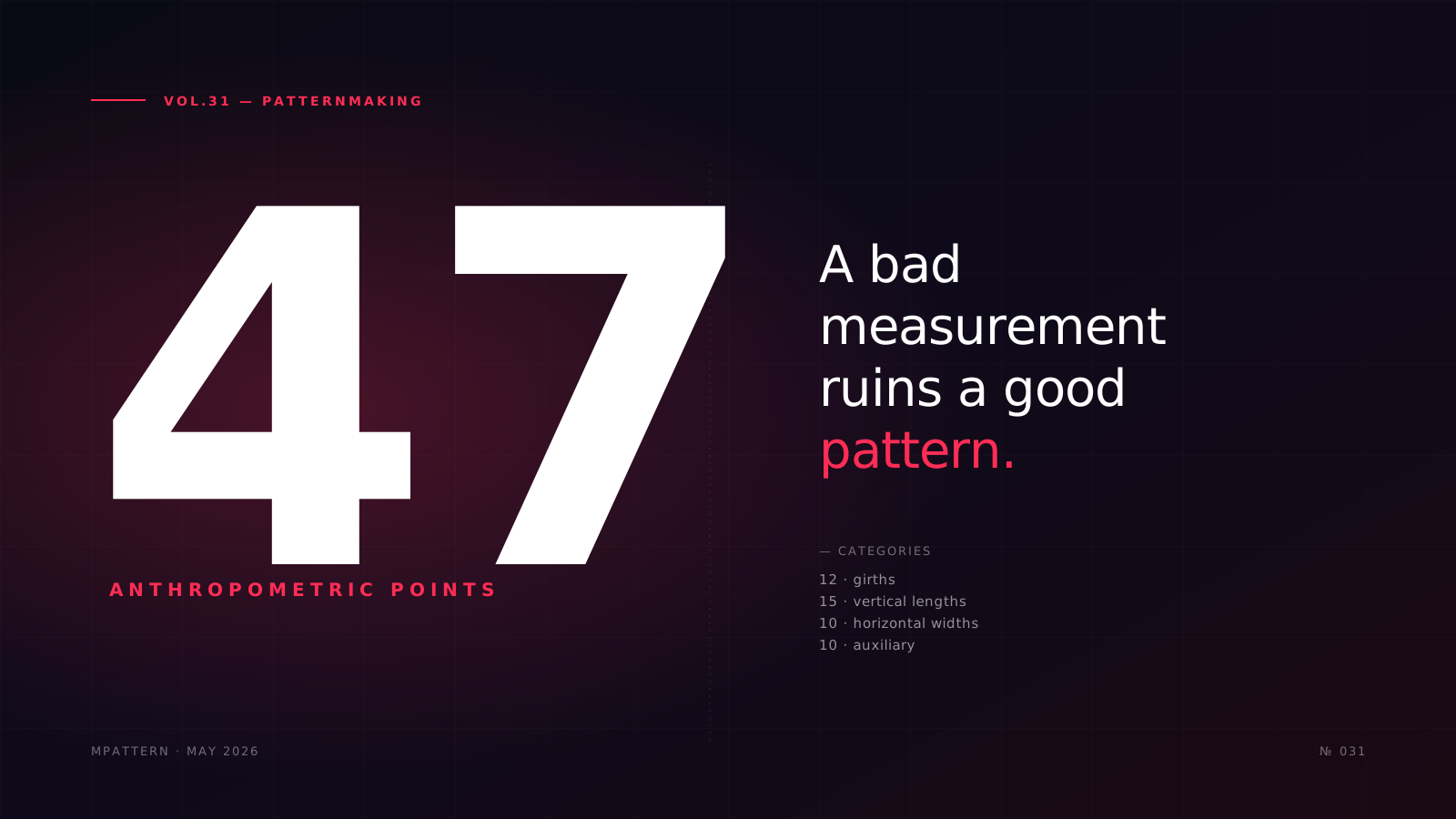
Any pattern maker who has worked made-to-measure for years confirms it: the pattern can be perfect, but if measurements are wrongly taken, the garment doesn't fit. And remaking a tailored jacket because chest girth was recorded 3 cm narrower than reality is one of the most expensive mistakes in the trade.
This article is a practical guide to the 47 anthropometric measurements a modern parametric engine needs to generate a complete base pattern, in what order to take them, which errors are most frequent, and how to verify them before cutting.
Why 47 measurements and not 12
When you learn basic pattern making, the measurements taught are four or five: chest girth, waist, hip, length. Enough for a very generic base pattern.
The difference between a pattern that "more or less fits" and a truly made-to-measure pattern is granularity. A professional parametric engine needs additional measurements that basic pattern making approximates with standard formulas: back width, armhole depth, bust point separation, hip height relative to waist, inside and outside leg length, wrist girth, neck girth, etc.
47 measurements is the minimum set that covers all categories of basic garments: tops, dresses, skirts, trousers, coats, and underwear. It's not paranoia; it's what a system needs to approximate nothing.
The 4 categories of measurements
The 47 measurements group into four functional families:
1. Girths (12 measurements)
Neck, chest, under bust, waist, high hip, hip, arm girth, elbow, wrist, thigh girth, knee, and ankle. Taken horizontal, parallel to the floor, with the tape measure perfectly level. The most common error here is letting the tape drop at the back: 1 cm of tilt introduces 2 cm of error on large girths.
2. Vertical lengths (15 measurements)
Total back length (from nape to waist), front length (from shoulder to waist passing through bust point), hip height relative to waist, total length to knee, to ankle, sleeve length from shoulder to wrist, sleeve length from underarm, armhole height, etc.
The expensive error here is back length: it's taken from the most prominent point of the seventh cervical vertebra, not from "where the back starts". 2 cm of error at this point shifts the entire armhole position.
3. Horizontal widths (10 measurements)
Shoulder width, back width (at armhole height), bust point separation, front chest width, front hip width, etc. These are the measurements that basic pattern making approximates with formulas, and they generate the biggest differences between clients. Two people with the same chest girth can have very different shoulder widths.
4. Auxiliary measurements (10 measurements)
Total height, weight (indicative, helps estimate soft tissue), neck length, standard neckline depth, etc. Some are referential, others are used for cross-validation (if the system detects waist girth is larger than hip girth, there's probably an error).
Order matters
There's an optimal sequence for taking the 47 measurements that minimizes fatigue and client-position errors:
- Client wears tight underwear or a fitting suit. Loose clothing falsifies girths by 2-5 cm.
- First mark reference points with tailor's tape: nape (7th vertebra), shoulder point, underarm, natural waist, most prominent hip. These points don't vary if the client breathes or changes posture.
- Take all girths in descending order: neck → chest → waist → hip → thigh → knee → ankle, tape parallel to the floor. Then arms.
- Take all vertical lengths in descending order: total back → hip → knee → ankle. Then sleeve lengths.
- Take horizontal widths with the client standing, shoulders relaxed, arms loose.
- Close with auxiliary measurements: total height, shoulder angle (normal/high/low shoulder slope).
Total time with practice: 12-15 minutes per client.
Most common errors
Five, in order of frequency:
- Waist mislocated. It's not the trouser waist, it's the natural line where the torso narrows. Ask the client to lean sideways: the fold that forms marks the natural waist.
- Girths with tape not parallel to floor. Solution: client facing a mirror, you behind. The tape should read the same height front and back.
- Back length from shirt collar instead of from 7th vertebra. Typical difference: 3-4 cm. The entire armhole shifts.
- Chest girth taken without neutral breathing. The client should breathe normally, neither inflating nor emptying lungs. Repeat the measurement twice and use the average.
- Client with heels or barefoot when the garment will be worn the opposite way. If the garment will be worn with heels, measure with heels. Difference in vertical lengths: up to 8 cm.
Cross-validation
Before cutting, three quick validations detect most badly-taken measurements:
- Chest > waist > under bust in standard women. If not, recheck waist.
- Hip > waist except in very specific cases (high waist). Discrepancy >2 cm without justification: re-measure.
- Sleeve length from shoulder = back length × 0.68 ± 4 cm in standard human proportions. Outside that range: probably an error.
A good parametric engine performs these validations automatically. If you enter inconsistent measurements in MPattern, the system flags which are likely wrong before generating the pattern.
Practical conclusion
Taking measurements well is a craft learned through repetition. The 47 points sound like a lot at first, but with practice they're taken in 12 minutes and eliminate most garments that "almost fit".
For ateliers receiving new clients every week, standardizing this measurement-taking with a sheet template and cross-validation before cutting is probably the operational change that most reduces returns and remakes.
To see how these 47 measurements translate into a concrete base pattern, check our article on how a parametric engine works.
Frequently asked questions
How long does it take to measure someone for custom pattern making?
With practice, taking all 47 professional anthropometric measurements requires 12-15 minutes per client. This includes marking reference points with tailor's tape, recording all girths in descending order, vertical lengths, horizontal widths, and auxiliary measurements. Beginners typically need 20-30 minutes until they establish an efficient workflow and develop muscle memory for the measurement sequence.
What is the most common mistake when taking body measurements for sewing?
Mislocating the natural waist is the most frequent error in professional measurement taking. Many people measure at the trouser waist instead of the natural line where the torso narrows. The correct technique is asking the client to lean sideways—the fold that forms marks the true natural waist. This single mistake can shift the entire pattern by 3-5 centimeters and ruin garment fit.
Why do custom patterns need 47 measurements instead of basic ones?
Basic pattern making uses 4-5 measurements and approximates the rest with standard formulas, producing garments that only "more or less fit." Professional made-to-measure requires 47 measurements because they capture individual variations that formulas cannot predict—like back width, armhole depth, bust point separation, and hip height relative to waist. Two people with identical chest girth can have vastly different shoulder widths, making granular measurement essential for true fit.
How do you verify body measurements are correct before cutting fabric?
Three quick validations catch 90% of measurement errors before cutting: verify chest girth is larger than waist and under-bust in standard women's bodies; confirm hip measurement exceeds waist by more than 2 cm unless justified; check that sleeve length from shoulder equals approximately 68% of back length (±4 cm). Modern parametric engines perform these cross-validations automatically and flag inconsistent measurements before pattern generation begins.
Where exactly do you measure back length for pattern making?
Back length is measured from the most prominent point of the seventh cervical vertebra (nape) down to the natural waist, not from "where the back starts" on a shirt collar. This is the single most expensive measurement error—recording it 2 cm wrong from a shirt collar instead of the actual vertebra shifts the entire armhole position and can ruin a tailored jacket that costs hundreds to remake.
With MPattern
Build your own base blocks
The parametric engine constructs technical patterns from your measurements. Auto-grading and export in minutes.
Try the engine