How to Draft Bust Darts on a Basic Pattern Block: Technical Guide for Accurate Fit
Bust darts are the fundamental shaping element that transforms a flat pattern block into a three-dimensional garment. This technical guide breaks down the geometry, placement principles, and drafting techniques that professional pattern makers use to achieve precise bust shaping on bodice blocks.
The bust dart represents the single most critical shaping element in women's pattern making. While beginners often view darts as decorative lines, professionals understand them as three-dimensional geometric solutions to the fundamental problem of wrapping a two-dimensional fabric around a three-dimensional form. The breast tissue creates a sphere-like projection that demands volume accommodation, and the dart provides that accommodation by removing excess fabric from areas that don't need it and redistributing that fabric where the body protrudes.
According to research published in the International Journal of Fashion Design, Technology and Education, poorly positioned bust darts account for approximately sixty-eight percent of fit complaints in ready-to-wear bodices. This statistic underscores why mastering bust dart construction is non-negotiable for anyone serious about pattern making. The transition from placing darts by guesswork to understanding their geometric logic represents a significant leap in pattern making competency.
Understanding Bust Apex Geometry and Body Measurement
The bust apex—often called the bust point or nipple point in technical literature—serves as the geometric center from which all bust darts radiate. This point is not arbitrary. On a well-fitted bodice, every dart leg, regardless of where it originates on the pattern perimeter, must point directly toward this apex. The apex location varies significantly among individuals based on breast tissue distribution, age, body composition, and garment wearing ease.
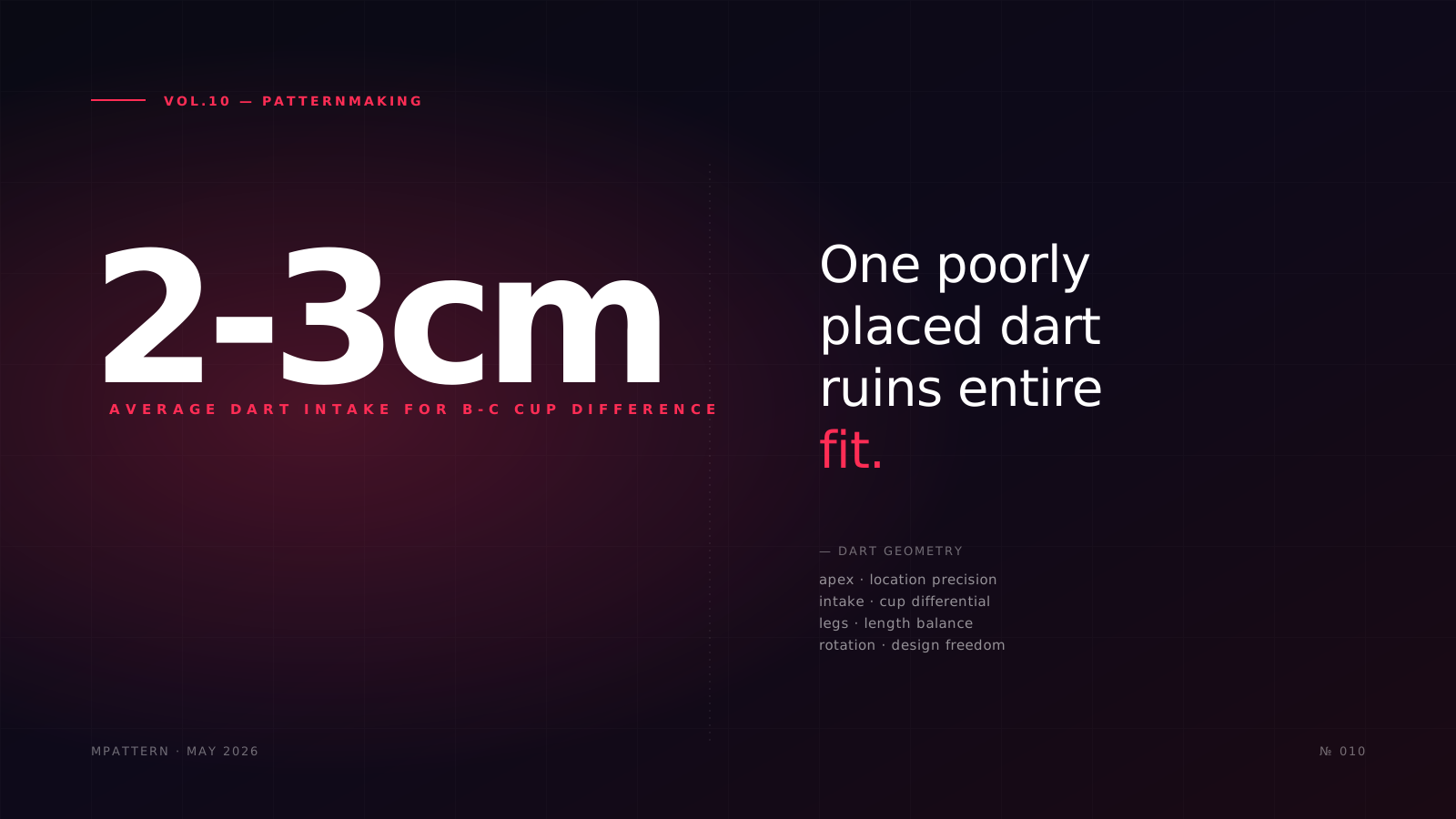
To locate the apex accurately, you need two critical measurements: the high bust circumference and the full bust circumference. The difference between these measurements, divided by four for quarter-pattern work, gives you the dart intake required. For a standard B-cup differential, this typically equals two to two point five centimeters per dart. C-cup differentials require three to three point five centimeters. A crucial but often overlooked measurement is the apex height from waist and the apex distance from center front. These two measurements create the coordinate system that positions your apex point on the pattern block.
On a basic bodice block, measure from the center front line at bust level (the horizontal line that crosses the fullest part of the bust) toward the side seam. The apex typically falls at forty-three to forty-eight percent of the chest width for sizes eight through fourteen, though this ratio shifts for petite and plus proportions. From the waist up, the apex height usually measures between twenty-three and twenty-seven centimeters for average proportions, but this varies with torso length. These measurements must come from the actual body, not from standard charts, when drafting custom blocks.
Drafting the Primary Waist Dart
The waist dart is the most common bust dart configuration on basic blocks because it serves dual purposes: it shapes the bust and simultaneously creates the waist suppression needed for fitted silhouettes. Begin by marking your apex point on the pattern using the coordinates you measured. From the waist seamline, measure up toward the apex. Your dart legs will converge at a point approximately two to two point five centimeters below the actual apex. This offset is critical—terminating the dart at the true apex creates a peaked, unnatural appearance in the fabric.
Mark your waist dart position at the center of the dart intake. On most blocks, this falls roughly midway between the center front and the side seam, though exact placement depends on your block's proportions. The total dart intake at the waist equals half your bust-to-waist differential plus the bust dart intake calculated earlier. For a ten centimeter waist suppression and a two point five centimeter bust dart intake, your total waist dart removes twelve point five centimeters from the waist seamline.
Draw two lines from the dart vanishing point (that point two to two point five centimeters below apex) down to the waist seamline, spacing them to remove your calculated intake. These dart legs must be equal length. Unequal legs cause the fabric to twist and pull. Use a ruler to verify both legs measure identically from vanishing point to waistline. The dart legs should form an angle between eight and fifteen degrees for standard cup sizes. Angles exceeding fifteen degrees create excessive bulk and are better split into multiple smaller darts.
Rotating Darts to Alternative Positions
Dart rotation is the pattern making technique that gives designers freedom to place shaping lines wherever the design requires. Because all bust darts radiate from the apex point, you can close one dart and open an equivalent dart at any other location on the pattern perimeter. This geometric principle—that fabric volume removed at any radius from a center point can be redistributed to any other radius—is fundamental to pattern manipulation.
To rotate a waist dart to the shoulder seam, first mark your desired new dart location on the shoulder seam. Draw a line from this point directly to the apex. Cut along this new line from the shoulder seam almost to the apex, leaving a tiny paper hinge. Now close the original waist dart completely by bringing the dart legs together. As you close the waist dart, the shoulder slash line will automatically open, creating a new dart with the same intake as the original waist dart. The total volume removed from the pattern remains constant.
Common rotation destinations include the side seam, the armhole, the neckline, the center front, and the shoulder. Each position creates different visual effects and different construction considerations. Shoulder darts work well for structured garments but add bulk at the shoulder. Armhole darts integrate cleanly into the armhole seam and work for both woven and knit fabrics. French darts, which angle from the side seam toward the apex, create elegant diagonal lines popular in mid-century design. Industry observations suggest that many independent designers rotate bust darts to the side seam for contemporary casual wear, while others maintain waist darts for more classic silhouettes.
When rotating darts, maintain that two to two point five centimeter offset from the true apex. If your new dart terminates exactly at apex height, redraw the vanishing point slightly below. For designs requiring multiple darts—such as a small shoulder dart plus a small side seam dart—you can split the total dart intake between multiple locations. The sum of all dart intakes must equal your original bust dart intake requirement.
Adjusting Dart Length and Intake for Fit Corrections
Fit issues related to bust darts manifest in predictable ways. Horizontal pull lines radiating from the bust indicate insufficient dart intake—the fabric is stretched across the bust because the dart didn't remove enough fabric. Excess fabric pooling below the bust suggests too much dart intake or improper dart placement. Diagonal drag lines from apex to shoulder mean the dart legs are unequal length or the apex position is incorrect.
To increase dart intake for a fuller bust, add equal amounts to both dart legs at the waist seamline or wherever the dart originates. Do not simply widen one leg; this rotates the apex position and creates new fit problems. For each additional centimeter of circumference needed at the bust, add approximately zero point five centimeters to the total dart intake (zero point two five centimeters per leg). After adjusting intake, redraw the dart legs to ensure equal length and smooth curves where they connect to seamlines.
Dart length adjustments address apex height issues. If the fabric pulls tight above the bust apex but gapes below, your dart terminates too low—lengthen both legs by the same amount. If the reverse occurs, shorten the dart. Standard adjustment increments are zero point five to one centimeter. After each adjustment, make a muslin and fit-check. According to research from the Textile Research Journal, iterative fitting with muslin mock-ups reduces final garment alterations by seventy-three percent compared to attempting corrections on fashion fabric.
For mature or fuller figures, dart intake may need to redistribute. Instead of a single large waist dart, consider splitting intake between a smaller waist dart and a small French dart or underarm dart. This distributes shaping more naturally across the bust curve. Many commercial pattern companies now offer blocks with built-in dart splits for cup sizes DD and above, reflecting industry recognition that single-dart solutions don't scale effectively across the full size range.
Integrating Dart Shaping with Ease and Seam Allowances
Pattern making software has transformed how professionals handle dart calculations, particularly when dealing with wearing ease. Modern platforms allow pattern makers to input body measurements and automatically generate blocks with correctly positioned bust darts, accounting for both the body's three-dimensional form and the desired ease allowance. AI-assisted measurement analysis significantly reduces the time spent on initial block development compared to traditional manual drafting methods.
Wearing ease must be considered when calculating dart intake. A close-fitted bodice requires the full bust-to-waist differential plus dart intake. A semi-fitted bodice might reduce that differential by one to two centimeters. Loose-fitting styles may eliminate bust darts entirely, replacing them with ease across the entire bust area. However, eliminating darts doesn't eliminate the need to understand them. Even in loose garments, knowing where the apex falls helps you place style lines, pockets, and embellishments in flattering positions.
Seam allowances interact with darts in specific ways. At the waist seamline, your seam allowance continues right up to the dart legs. Don't reduce seam allowance in the dart area—this weakens the seam. When sewing darts, stitching begins at the wide end (waist, in a waist dart) and tapers to nothing at the vanishing point. The last few stitches should parallel the fold rather than angling into it. This technique, documented in Vogue's classic pattern making manual, prevents the peaked dart point that marks amateur construction.
For professional results, press darts before joining bodice sections to other garment pieces. Vertical darts (waist darts, underarm darts) press toward center front on the right side of the body and toward center back on the left. This pressing direction, though counterintuitive, creates the smoothest appearance when wearing. Horizontal darts (shoulder darts, neckline darts) press downward. French darts typically press toward the nearest vertical seam. After pressing, carefully trim the dart legs to reduce bulk if the fabric is heavy, leaving about one centimeter from the stitching line.
Common Dart Placement Errors and Diagnostic Solutions
The most frequent error in bust dart construction is working from standardized pattern drafting charts rather than individual measurements. While charts provide useful starting points, they represent idealized average bodies that exist more in theory than reality. Serious fit problems often trace back to using generic apex positions instead of measuring the actual body. A chart might place the apex at twenty-five centimeters from waist and twelve centimeters from center front for a size ten, but if your client's measurements differ by even two centimeters, the resulting pattern will fit poorly.
Another common mistake involves dart angle miscalculation. Pattern makers sometimes create darts with legs that aren't equal length or that don't point toward the apex. This happens frequently when rotating darts—the drafter closes the original dart but fails to ensure the new dart's legs converge at the correct point. The solution is methodical: use a ruler to measure both dart legs from vanishing point to seamline. They must be identical. Draw a line from the vanishing point to the true apex and verify it's perpendicular to an imaginary line connecting the dart legs at the seamline.
Misunderstanding dart intake calculation leads to loose or tight fits. Remember that the dart intake equals the difference between high bust and full bust measurements, divided by four for quarter-pattern work. This calculation assumes a certain amount of wearing ease is already built into your high bust measurement. If you're working with a very close-fitting block—say, for corsetry or performance wear—you may need to adjust this formula. Conversely, for relaxed-fit casual wear, you might reduce dart intake and add more general ease across the pattern. Industry standards published by the American Society for Testing and Materials provide ease guidelines that help calibrate these decisions.
Ignoring fabric behavior causes darts to perform differently than anticipated. Woven fabrics with no stretch require full dart intake for shaping. Knit fabrics with two-way stretch can reduce dart intake by twenty-five to fifty percent because the fabric itself provides some of the accommodation around the bust curve. Very stretchy fabrics may eliminate bust darts entirely. This doesn't mean the apex point becomes irrelevant—it means the fabric's mechanical stretch substitutes for the dart's geometric shaping. Style lines in knit garments should still respect apex position to avoid pulling or distortion.
Modern pattern making platforms that incorporate AI-assisted pattern generation help reduce these common errors significantly. Automated systems can analyze multiple body measurements simultaneously and flag inconsistencies—for example, if an apex height seems inconsistent with the torso length proportion, prompting for remeasurement before generating the block. This kind of cross-validation catches errors that manual drafting might miss until the muslin fitting stage.
Conclusion: Precision in Bust Dart Construction as Foundation for All Pattern Work
Mastering bust dart construction on basic pattern blocks establishes the foundation for virtually all subsequent pattern development. Whether you're drafting princess seams, designing asymmetric closures, or creating gathered bodices, understanding where the bust apex falls and how to shape fabric around it informs every design decision. The techniques covered here—accurate apex location through body measurement, geometric dart construction with proper intake calculations, dart rotation for design flexibility, and systematic fit adjustments—represent core professional competencies that separate amateur pattern making from professional practice.
The transition from drafting darts by guesswork to understanding their mathematical precision typically marks a turning point in a pattern maker's development. Students and independent designers who invest time in truly understanding bust dart geometry find that subsequent learning accelerates dramatically. Complex techniques like full bust adjustments, grading across multiple sizes, and even advanced digital pattern making become more intuitive once dart principles are second nature.
For those looking to accelerate this learning curve while maintaining professional rigor, modern pattern making platforms offer significant advantages. MPattern's approach combines traditional pattern making principles with computational precision, allowing you to focus on design decisions rather than calculation errors. The platform handles the geometric complexity while you maintain creative control—a partnership between human expertise and machine precision that represents the future of pattern making education and professional practice.
Frequently asked questions
How do I find the exact bust apex point on my pattern block?
Measure two distances from your body: apex height from waist (typically twenty-three to twenty-seven centimeters) and apex distance from center front (usually forty-three to forty-eight percent of chest width). Transfer these measurements to your pattern using the waistline and center front line as reference axes. The intersection point is your apex. Always measure the actual body rather than using standardized charts, as apex position varies significantly between individuals even within the same size category.
Why does my bust dart create a pointed peak instead of smooth shaping?
The dart terminates too close to or exactly at the apex point. Bust darts must end two to two point five centimeters below the true apex to allow fabric to curve naturally over the bust. Redraw your dart with the vanishing point lower, maintaining equal-length legs. Also check your stitching technique—the last few stitches should run parallel to the fold line rather than angling sharply into the point.
Can I eliminate bust darts completely for a looser fit garment?
Yes, but only by adding significant ease across the entire bust area. The volume a dart removes doesn't disappear—it either gets shaped into the dart or distributed as looseness across the pattern. For loose-fitting styles, you can eliminate darts and add four to eight centimeters of ease at bust level. However, the apex position still matters for placing style lines and avoiding awkward pulling across the bust, even without a sewn dart.
What is the difference between rotating a dart and moving it?
Rotating a dart maintains the same intake amount while changing where that shaping appears on the pattern perimeter. You close the original dart completely and open a new one elsewhere, keeping total volume constant. Moving a dart shifts the position along the same seamline without rotating—for example, sliding a waist dart three centimeters toward the side seam. Rotation changes the visual design line; moving adjusts placement for better fit or construction ease.
How much dart intake do I need for different cup sizes?
Calculate dart intake from the difference between high bust and full bust circumference, divided by four for quarter-pattern work. B-cup typically needs two to two point five centimeters per dart, C-cup needs three to three point five centimeters, D-cup needs four to four point five centimeters. For cup sizes DD and above, consider splitting the intake between two smaller darts rather than one large dart to distribute shaping more naturally and reduce bulk at the dart vanishing point.
With MPattern
Build your own base blocks
The parametric engine constructs technical patterns from your measurements. Auto-grading and export in minutes.
Try the engineRelated articles
Pattern making
Flat Pattern vs Draping: Technical Differences Between Both Pattern Making Methods
Pattern making
Pattern Grading by Garment Category: Tops, Pants, and Advanced Scaling Techniques
Pattern making
How to Take Measurements for Custom Pattern Making: Professional Techniques for Accurate Garment Fit