Industrial vs Domestic Sewing Machines: Key Differences for Pattern Makers and Garment Professionals
The choice between industrial and domestic sewing machinery fundamentally shapes production capacity, finish quality, and long-term operational costs. This technical guide examines the engineering differences that matter to pattern makers, ateliers, and independent designers.
The sewing machine debate between industrial and domestic models extends far beyond price tags. For pattern makers transitioning from home studios to professional ateliers, understanding these technical differences determines whether you can execute high-volume orders, maintain consistent stitch quality across heavy fabrics, or risk equipment failure mid-production.
This guide examines the engineering fundamentals, operational characteristics, and economic implications that separate industrial workhorses from domestic convenience machines—essential knowledge for anyone making purchasing decisions that will affect production capacity for years.
Motor Architecture and Power Delivery Systems
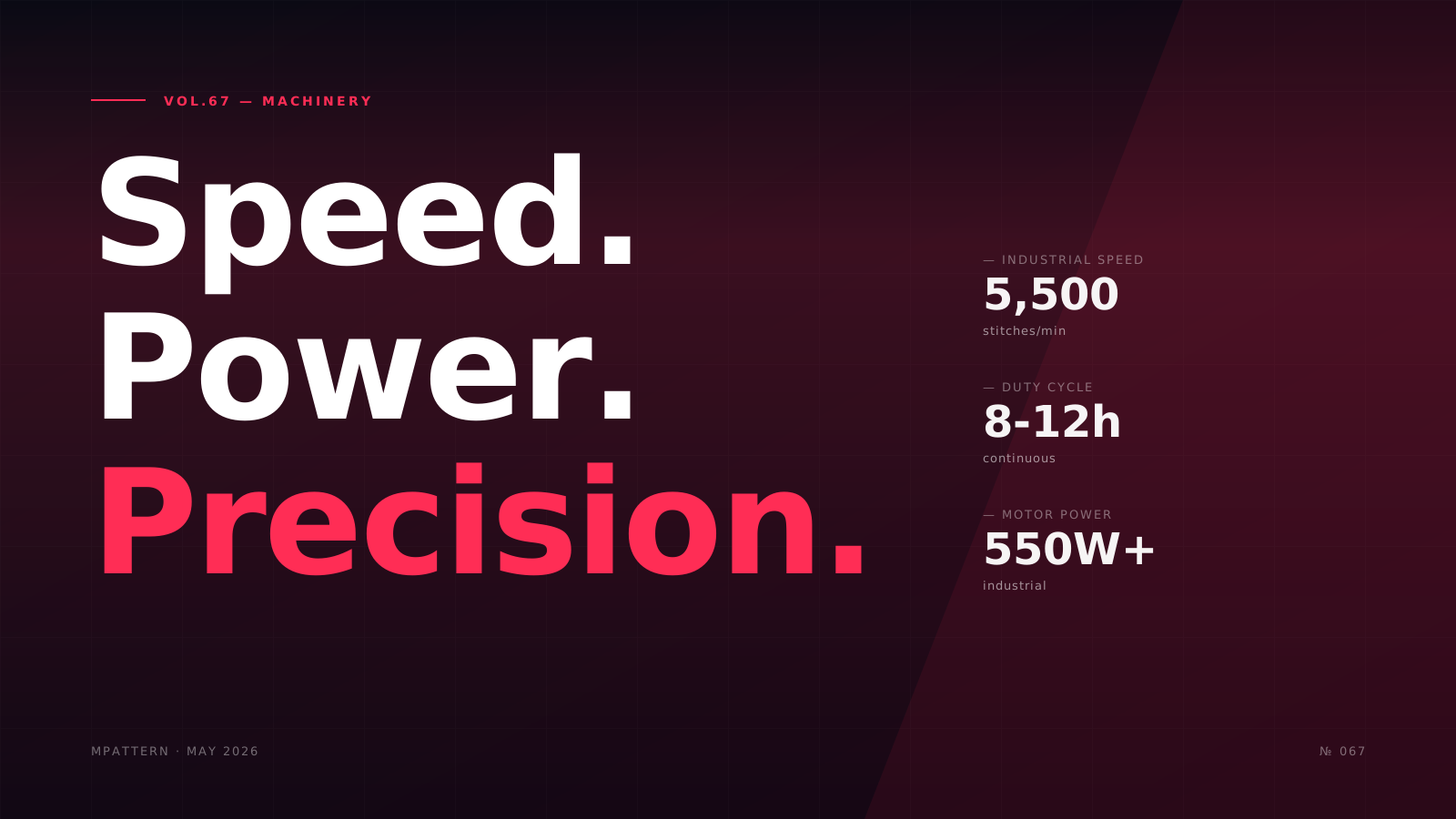
The motor represents the most fundamental engineering divergence. Industrial sewing machines employ clutch motors or servo motors rated between 550W and 1,100W, delivering torque sufficient to penetrate multiple layers of heavyweight denim, canvas, or upholstery fabric without speed reduction. According to technical specifications published by the Textile Institute, industrial motors maintain constant power output regardless of fabric resistance, crucial when sewing through seam allowances that triple fabric thickness.
Domestic machines utilize universal motors rated 60W to 120W, designed for intermittent use on lightweight to medium-weight fabrics. These motors prioritize quiet operation and compact housing over sustained power delivery. When confronted with thick seams, domestic motors slow dramatically or stall, forcing the operator to manually rotate the handwheel—a workflow incompatible with production schedules.
The thermal management systems differ radically. Industrial motors incorporate forced-air cooling and thermal cutoffs calibrated for 8-12 hour continuous operation. Domestic motors rely on passive cooling adequate for 1-2 hour sessions with rest periods. Pushing a domestic machine into production duty voids warranties and accelerates bearing wear, a costly lesson many home-based businesses learn after motor burnout.
Stitch Formation Mechanics and Feed Systems
Industrial machines employ dedicated stitch-type mechanisms: lockstitch-only, chainstitch-only, overlock-only. This specialization enables precision engineering of hook timing, thread tensioning, and feed dog coordination optimized for a single stitch type. The Sourcing Journal reported in 2023 that garment factories achieve 99.2% first-pass quality rates with properly calibrated industrial lockstitch machines, compared to 87% with multi-function domestic models on comparable fabric.
Domestic machines offer 20-200 decorative stitches via cam systems or computerized pattern selection. This versatility introduces mechanical compromises: generalized hook assemblies, adjustable feed dog timing, variable tension mechanisms. Each component must accommodate multiple stitch geometries, reducing the precision achievable in any single stitch type.
The feed system architecture diverges significantly. Industrial walking-foot and compound-feed mechanisms move fabric from both top and bottom surfaces simultaneously, preventing layer shifting in slippery fabrics (satins, linings) or stretchy knits. Domestic drop-feed systems rely solely on bottom feed dogs, adequate for wovens but problematic for technical fabrics. Pattern makers working with performance textiles or multiple-layer constructions find this limitation restrictive.
Stitch length consistency under load represents another critical difference. Industrial machines maintain stitch length within ±0.1mm variance at maximum speed through fabric thickness changes, achieved through heavy-duty feed dog gearing and positive-drive mechanisms. Domestic machines may vary ±0.5mm, visible in topstitching or when matching seam lines across pattern pieces.
Speed, Duty Cycle, and Production Economics
Industrial straight-stitch machines operate at 3,000-5,500 stitches per minute (SPM) sustainably. Overlock machines reach 7,000 SPM. This speed advantage translates directly to production capacity: a 30cm seam requiring 180 stitches takes 2.2 seconds at 5,000 SPM versus 10.8 seconds at 1,000 SPM (typical domestic maximum). Over a production run of 50 garments, this compounds into hours of saved labor.
Domestic machines rated for 1,000-1,500 SPM maximum rarely sustain those speeds in production environments. Heat buildup, vibration, and mechanical stress force operators to reduce speed by 30-50% for reliability. The duty cycle limitation—typically 20-30 minutes of continuous operation before cooldown periods—makes domestic machines unsuitable for batch production exceeding 10-15 units.
The economic calculation extends beyond purchase price. Data from the Fashion Institute of Technology's 2024 production cost study indicates that industrial machine ownership costs (purchase + maintenance + electricity) per garment drop below domestic machine costs at approximately 200 units annually for simple construction, 80 units for complex multi-seam garments. The breakeven point arrives faster than most new ateliers anticipate.
Maintenance costs favor industrial equipment paradoxically. Standardized parts, serviceable construction, and widespread technician familiarity make industrial machine repair straightforward. Domestic machines incorporate proprietary electronic boards and plastic gearing that often cost more to repair than replace, creating hidden lifecycle costs.
Build Quality, Durability, and Workspace Integration
Industrial machines feature cast-iron frames weighing 25-40kg, providing vibration damping essential at high speeds. Bearing assemblies use ball bearings or needle bearings rated for millions of cycles. Hook assemblies machine from hardened steel tolerate years of continuous use without timing drift. This construction yields operational lifespans of 20-30 years with proper maintenance—many garment factories operate machines from the 1970s.
Domestic machines employ die-cast aluminum or composite frames weighing 5-8kg, adequate for intermittent home use but prone to alignment drift under production stress. Bushings replace ball bearings in many pivot points. Plastic components in bobbin cases, presser foot assemblies, and internal gearing wear visibly within 500-1,000 hours of operation. Realistic lifespan under daily use: 3-5 years before major component failure.
The workspace footprint and power requirements differ substantially. Industrial machines require dedicated tables with motor mounting below, external thread stands, and often three-phase electrical supply (though single-phase servo motors increasingly dominate). The installation commitment suits permanent studio spaces but complicates mobile operations or shared workshops.
Domestic machines offer plug-and-sew portability, internal thread storage, and compatibility with standard electrical outlets. For pattern makers operating in co-working spaces or teaching environments, this flexibility carries real value. The tradeoff: no industrial machine matches domestic portability, no domestic machine matches industrial productivity.
Specialized Functions and Pattern Making Workflows
Pattern makers frequently require specialized edge finishing, blind hemming, or buttonhole operations. Industrial machines address these through dedicated special-purpose machines: blind-hem machines, buttonhole machines, button-sewers. Each performs one operation with exceptional speed and consistency. A factory-grade buttonhole machine produces 40-50 buttonholes per minute; a domestic machine requires 45-60 seconds per buttonhole.
Domestic machines integrate multiple functions into single units: buttonholes, zipper insertion, blind hems, decorative stitches. For sample-making and one-off commissions, this versatility reduces equipment investment. When producing 30 identical garments, the speed disadvantage becomes prohibitive.
The learning curve differs significantly. Industrial machines demand operator skill development: precise speed control via knee pedal or servo dial, manual thread tension adjustment for each fabric, understanding of timing and hook relationships. Mastery requires weeks of focused practice. Domestic machines incorporate automatic tension, push-button stitch selection, and error-tolerant designs that forgive operator inexperience. For students and hobbyists, domestic machines accelerate initial skill acquisition.
Pattern development workflows intersect with machine choice. When testing muslins and adjusting fit, domestic machine versatility (zigzag for seam finishing, adjustable presser foot pressure) streamlines iterative changes. When cutting production patterns for consistent replication, industrial machine speed and stitch consistency ensure that samples accurately represent final production quality.
Making the Strategic Equipment Decision
The industrial versus domestic decision matrix includes factors beyond technical specifications. Noise levels matter: industrial machines produce 75-85 dB, requiring hearing protection and limiting residential use. Domestic machines operate at 60-70 dB, neighborly in apartment settings.
Initial investment diverges significantly. New industrial lockstitch machines range €800-2,500; industrial overlockers €1,200-3,500. Domestic machines span €150-1,200 for advanced computerized models. Used industrial equipment from factory liquidations offers alternatives: fully functional 1980s-era machines sell for €200-400, requiring only cleaning and new belts.
Pattern making education traditionally begins on domestic machines, transitions to industrial equipment as production demands grow. This progression mirrors the broader industry: independent designers start with domestic machines, add industrial straight-stitch capacity at 20-30 units monthly, eventually equipping full production studios with specialized industrial machines as volume reaches 100+ units monthly.
The decision ultimately aligns with business model. Made-to-measure ateliers producing 5-15 custom garments monthly may never justify industrial investment, particularly if specializing in delicate fabrics where domestic machine gentleness proves advantageous. Ready-to-wear designers producing seasonal collections of 50-200 units face clear industrial economics.
For pattern makers using MPattern to develop graded patterns for production, the machine choice determines whether digital efficiency translates to physical output capacity. Accurate patterns cut production time, but only appropriate sewing equipment captures that advantage.
Conclusion: Equipment Decisions Shape Production Capacity
The industrial versus domestic sewing machine choice represents a fundamental business decision disguised as equipment procurement. Motor power, stitch consistency, speed capacity, and duty cycle limitations directly constrain production volume, delivery timelines, and per-unit costs. Pattern makers must align equipment capabilities with production volumes, fabric weights, and construction complexity their business model demands.
No universal recommendation exists—the optimal choice depends on whether you prioritize versatility over speed, portability over power, initial cost over lifecycle economics. Understanding these technical differences enables informed decisions that support sustainable growth rather than costly equipment mismatches.
For designers developing patterns with precision tools like MPattern, ensuring your sewing equipment matches your production ambitions completes the professional workflow from digital design to finished garment.
Frequently asked questions
How much faster are industrial sewing machines than domestic ones?
Industrial machines operate at 3,000-5,500 stitches per minute compared to domestic machines at 1,000-1,500 SPM maximum. In practical terms, a 30cm seam takes 2 seconds on industrial equipment versus 11 seconds on domestic, compounding significantly over production runs of 20+ garments.
Can a domestic sewing machine handle production of 50 garments monthly?
Domestic machines struggle with sustained production exceeding 10-15 units monthly due to duty cycle limitations and motor heat buildup. At 50 garments monthly, most domestic machines experience accelerated wear, frequent breakdowns, and likely motor failure within 6-12 months of continuous use.
Why do industrial machines cost more if they only do one stitch type?
Industrial machines dedicate engineering to perfecting single stitch types—lockstitch, chainstitch, or overlock—achieving superior consistency, speed, and durability. This specialization requires precision components, heavy-duty construction, and powerful motors, justifying higher initial cost through decades of reliable operation and lower per-garment production costs.
What fabric weights require an industrial machine versus domestic?
Domestic machines handle fabrics up to medium-weight denim and light canvas adequately. Industrial machines become necessary for heavyweight denim, upholstery fabrics, multiple-layer constructions, or any scenario requiring sustained sewing through fabric exceeding 4mm total thickness without speed reduction or motor strain.
Is it worth buying a used industrial sewing machine from factory liquidation?
Used industrial machines from the 1980s-1990s often provide excellent value at €200-400, requiring only basic maintenance like new belts and cleaning. Cast-iron construction and standardized parts ensure functionality for decades. Verify hook timing and test-sew before purchase; mechanical simplicity makes used industrial equipment more reliable than older domestic machines with worn plastic components.
With MPattern
Compatible with your industrial plotter
Export 1:1 SVG ready to cut on plotter. No conversions, no loss of precision.
See export options