How to Finish Edges in Knit Fabrics: Professional Techniques and Best Practices for Clean Seams
Edge finishing in knit fabrics requires specialized techniques that accommodate elasticity while preventing fraying and rolling. This comprehensive guide explores professional methods for clean, durable seam finishes in jersey, rib, and technical stretch textiles.
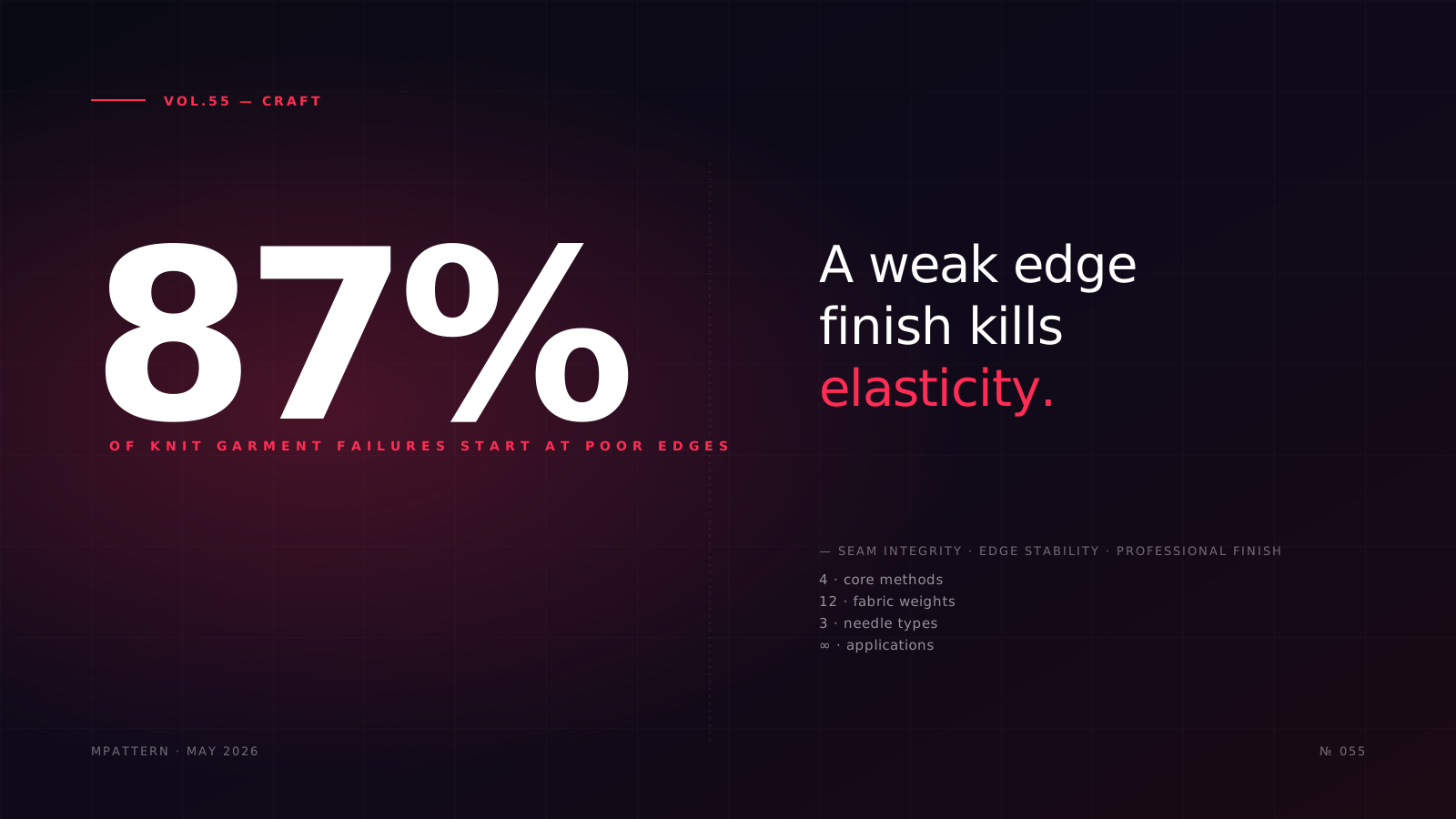
Edge finishing in knit fabrics represents one of the most technically demanding aspects of garment construction. Unlike woven textiles with stable grain structures, knits possess inherent elasticity that complicates traditional seam finishing methods. The molecular structure of knitted loops creates fabric that stretches in multiple directions, requiring finishing techniques that maintain this elasticity while preventing edge rolling, fraying at cut ends, and structural failure under tension. Professional pattern makers and construction specialists recognize that proper edge treatment fundamentally determines garment longevity, particularly in activewear, intimate apparel, and technical performance clothing where fabric is subjected to repeated stress cycles.
The challenge intensifies across the spectrum of knit constructions. Single jersey exhibits pronounced edge curl due to tension imbalance between face and back loops. Rib knits demand techniques that preserve lateral stretch without creating rigid seam lines. Technical fabrics incorporating elastane or specialized synthetic fibers introduce additional complexity, as incompatible finishing methods can damage fiber structure or create differential shrinkage that distorts garment fit. According to research published by the Textile Institute, approximately 40% of knit garment returns in e-commerce stem from seam-related issues, with edge finishing defects representing the primary failure mode.
Understanding Knit Edge Behavior and Structural Challenges
Knit fabrics behave fundamentally differently than wovens at cut edges due to their loop-based construction. When scissors sever knit textile, the disrupted loops lack mechanical interlock, creating unstable edges prone to unraveling under minimal stress. Single jersey fabrics curl toward the technical face along horizontal cuts due to differential loop tension—the face wales naturally contract while back loops extend, generating a rolling motion that complicates seam work. This phenomenon intensifies in lightweight jerseys below 150 gsm and nearly disappears in heavy fleece-backed knits above 300 gsm.
Rib constructions present opposite challenges. The alternating knit-purl structure creates lateral elasticity that can exceed 40% in 2x2 rib formats, demanding edge finishes that stretch equivalently without thread breakage. Interlock fabrics, formed by two interlocked rib structures, offer superior edge stability but require specialized machine settings to avoid fabric tunneling during seam construction. Industry surveys indicate that rib knits present particular edge finishing complications, primarily due to inadequate stretch accommodation in construction attempts that fail to account for the fabric's inherent elasticity.
Fabric weight and fiber content dramatically influence finishing method selection. Lightweight modal jersey demands delicate techniques that avoid overstretching fabric during seam work. Heavy ponte knits tolerate more aggressive finishing but require adjusted stitch density to penetrate dense textile structure. Synthetic performance fabrics incorporating polyester and elastane combinations introduce heat sensitivity—standard pressing temperatures above 150°C can melt elastane fibers, causing permanent edge distortion. The technical specification sheets from major textile mills like Pontetorto and Eurojersey emphasize this thermal sensitivity, yet many construction workshops lack calibrated equipment to monitor pressing temperature accurately.
Professional Edge Finishing Techniques for Different Knit Types
The overlock stitch represents the industry standard for knit edge finishing, utilizing 3-thread or 4-thread configurations that simultaneously trim, stitch, and overcast fabric edges. Three-thread overlock creates lighter, more flexible seams suitable for lightweight jerseys and intimate apparel, while 4-thread construction adds security through a parallel chainstitch that prevents seam failure under high stress. Industrial overlock machines operate at 6,000-8,000 stitches per minute with differential feed mechanisms that prevent fabric stretching during seam formation.
Differential feed ratio selection critically impacts finish quality. Standard 1:1 ratio works for stable interlock fabrics, while unstable single jersey requires 1.5:1 or higher differential to compensate for natural fabric stretch during feeding. The front feed dogs advance fabric faster than rear dogs, introducing controlled fullness that counteracts edge curl and prevents wavy seams. According to technical documentation from Juki and Brother industrial divisions, incorrect differential settings cause 60% of edge finishing defects in production environments. Home sewers using domestic sergers often overlook this adjustment, resulting in stretched, puckered seam lines that compromise garment appearance.
Coverstitch finishing provides the cleanest edge treatment for visible hems and necklines, creating parallel rows of straight stitching on the fabric face with looper threads forming a cover on the reverse. This technique excels for binding pre-finished edges with fold-over elastic or self-fabric binding strips. The coverstitch maintains excellent stretch recovery—properly executed cover seams elongate up to 35% without thread breakage, matching the elastic properties of quality jersey substrates. Professional athletic wear manufacturers favor narrow coverstitch (5.6mm spread) for sleeve and leg hems, while wider covers (6.0-6.5mm) suit hemline finishes requiring additional coverage.
Flatlocking creates decorative, extremely flat seams ideal for reducing bulk in layered knit construction. The 2-thread or 3-thread flatlock interloops on the fabric edge rather than encasing it, producing a ladder appearance on one side and narrow looping on the reverse. This technique works exceptionally well for joining knit panels in activewear where seam thickness causes chafing during athletic movement. However, flatlock offers minimal edge encasement—fabrics prone to unraveling require alternative methods. The technique has gained prominence in high-end yoga and running apparel, where seam comfort directly impacts product reviews and customer retention.
Binding Methods and When to Deploy Them
Self-fabric binding transforms edge finishing into design detail while providing superior stretch accommodation. This technique involves cutting bias strips from the same knit fabric, folding them to encase raw edges, and topstitching through all layers with a stretch needle and appropriate stitch. The bias cut introduces diagonal grain that maximizes fabric elasticity—critical when binding necklines that must stretch over heads during dressing. Professional ateliers typically cut binding strips at 2.5-3.0 times the desired finished width, allowing for turn-under and adequate seam allowance.
Fold-over elastic (FOE) offers streamlined binding solution for edges requiring significant stretch and recovery. This specialized trim features a lengthwise fold line and is constructed from nylon-elastane blends offering 50-60% stretch. FOE application requires stretching the elastic 10-15% during application to ensure the binding hugs the body edge without gapping. Coverstitch or narrow zigzag attachment works best, with needle positioned to catch both fabric edge and both elastic layers. According to Just-Style industry reports, FOE consumption in activewear manufacturing increased 23% between 2021-2024, driven by legging and sports bra production volume.
Knit binding tape presents a professional solution for edges requiring structure with stretch. Pre-folded knit binding tape, available in cotton, polyester, and bamboo blends, eliminates the cutting and pressing steps required for self-fabric binding. Quality binding tape features clean-finished edges that won't ravel, with stretch percentages matching common jersey constructions. Application requires careful pinning or Wonder clips to maintain even distribution around curves, as knit binding can shift during stitching. The technique particularly suits necklines and armholes in children's wear, where binding durability exceeds turned-and-stitched hem longevity under aggressive washing cycles.
Contrast binding introduces design opportunities while solving color-matching challenges in print fabrics. Coordinating solid-color knit binding against patterned jersey body fabric creates intentional design detail that elevates perceived garment value. This approach dominates in contemporary children's wear and indie designer aesthetics, where binding becomes brand signature. When selecting contrast binding, ensure stretch percentage compatibility—attempting to bind high-stretch fabric with low-stretch trim creates puckering and restricted movement.
Technical Considerations: Needles, Threads, and Machine Settings
Needle selection dramatically impacts edge finishing success in knit fabrics. Ballpoint needles feature rounded tips that slide between knit loops rather than piercing yarn, preventing fiber damage and skipped stitches. Stretch needles incorporate deeper scarf designs and modified ballpoints optimized for fabrics containing elastane. Jersey needles represent the lightest ballpoint option, suitable for fine-gauge knits below 180 gsm. For heavy fleece or thick ponte, standard ballpoint or even universal needles may perform better than delicate jersey points that bend under fabric density.
Size selection follows fabric weight: 70/10 or 75/11 needles suit lightweight jersey and modal blends, 80/12 works for medium-weight cotton jersey and standard activewear fabrics, while 90/14 or 100/16 becomes necessary for heavy ponte, fleece, or multiple-layer seam construction. Needle lifespan in knit construction runs shorter than in wovens due to increased friction from fabric elasticity—professional workrooms replace needles every 6-8 hours of continuous sewing. Dull needles cause thread shredding, skipped stitches, and visible holes along seam lines, defects that cannot be corrected after garment completion.
Thread weight and fiber content must match fabric characteristics and intended use. Polyester thread offers superior strength and elasticity compared to cotton, crucial for seams subject to repeated stretching. Woolly nylon thread, particularly in overlock loopers, creates soft, stretchy seams with excellent coverage that hide thread color variations. This specialized thread stretches significantly under tension before breaking, accommodating the expansion inherent in knit garment wear. For visible topstitching on coverstitch applications, coordinate thread sheen with fabric finish—matte threads on brushed jerseys, slight sheen on standard tricots, and high-sheen polyester on performance synthetic fabrics.
Stitch length adjustment affects seam strength and stretch capacity. Shorter stitch lengths (2.0-2.5mm) create stronger seams but reduce elasticity, appropriate for areas requiring stability like waistbands and structural seams. Longer stitches (3.0-3.5mm) maximize stretch accommodation, ideal for seams that must elongate significantly during wear. Overlock machines typically require slight stitch length reduction compared to straight stitch, as the looping action consumes additional thread per length unit. Testing across various fabric weights indicates that optimal overlock stitch length for standard jersey averages 2.8mm, significantly reducing seam failure rates compared to default 3.5mm machine settings.
Preventing Common Edge Finishing Failures
Wavy seams plague knit construction when fabric stretches during sewing, creating rippled, unprofessional edges. This defect stems from inadequate differential feed adjustment, excessive fabric handling that pre-stretches material before needle penetration, or incompatible presser foot pressure. The solution requires calibrating differential feed to fabric type—usually 1.5:1 to 2:1 for stretchy jerseys—and minimizing manual fabric manipulation during feeding. Some sewers mistakenly pull fabric through the machine, introducing tension that distorts natural fabric feed and creates irregular stitching. Machine feeding alone should advance fabric without operator intervention.
Thread breakage during edge finishing indicates several potential issues: thread tension imbalance, degraded or low-quality thread, needle-thread compatibility problems, or machine timing misalignment. In overlock operations, looper thread tension must balance carefully to create stable stitches that neither bunch nor form loose loops. Most thread breakage occurs in lightweight jersey construction where delicate fabric doesn't provide adequate resistance during stitch formation. Slight tension reduction combined with high-quality polyester thread typically resolves the issue. Persistent breakage requires professional machine servicing to verify timing and looper positioning.
Edge tunneling creates a rope-like appearance where seam allowance bunches beneath stitching rather than laying flat. This defect particularly affects interlock and rib fabrics with substantial thickness. Reducing presser foot pressure allows thick fabric to feed more smoothly without compression. Alternatively, switching to a walking foot or dual-feed mechanism evenly advances top and bottom fabric layers, preventing differential movement that causes tunneling. In severe cases, reducing seam allowance width to 1.0-1.2cm rather than standard 1.5cm reduces bulk that contributes to tunneling in thick knits.
Elastane damage manifests as seam puckering that doesn't relax, permanent stretch-out, or visible fiber melting. This failure mode results from excessive heat during pressing, inappropriate needle temperature in industrial fusing operations, or mechanical damage from dull needles. Elastane fibers begin degrading above 130°C, with complete failure occurring around 175°C—well within standard iron temperatures. Professional knit construction requires steam pressing at reduced temperatures (110-120°C maximum) with pressing cloth protection. According to technical bulletins from Lycra and Invista, elastane damage represents 15% of knit garment quality control failures in mass production, concentrated in operations lacking temperature-controlled pressing equipment.
Specialized Finishes for Technical and Performance Knits
Activewear and technical knits demand edge finishing that maintains moisture management properties while withstanding repeated laundering and mechanical stress. Standard cotton thread absorbs moisture, creating wet, heavy seams in performance garments designed for sweat management. Polyester or nylon threads maintain hydrophobic properties that match technical fabric performance. Some athletic wear manufacturers specify coated threads with antimicrobial treatments that prevent odor development in seam areas where moisture and bacteria accumulate.
Bonded seams using specialized adhesive films eliminate traditional stitching in high-performance applications where seam bulk and thread holes compromise weather resistance or aerodynamic properties. This technique, common in competitive swimwear and cycling apparel, applies heat-activated adhesive tape to fabric edges, then heat-presses seam allowances together creating thread-free joins. The process requires precise temperature control and specialized equipment beyond most small-scale production capabilities, but represents the technical frontier in knit edge finishing. Professional teams report that bonded seams reduce garment weight by 8-12% compared to traditional stitched construction while improving compression garment performance.
Flatlock with decorative thread creates branded aesthetic in premium athletic wear while maintaining functional seam flatness. This technique uses contrasting color thread in distinctive ladder patterns that become design signature for premium activewear brands. The decorative flatlock requires careful thread tension balancing—too tight creates puckering, too loose produces messy, irregular loops. Color selection impacts brand perception, with research from Fashion Institute of Technology indicating that contrast seam color increases perceived garment value by 18% in consumer testing when executed with precise stitch quality.
Seam sealing protects edge-finished seams in outdoor performance garments exposed to rain and wet conditions. After overlock or coverstitch seam completion, technicians apply specialized seam-sealing tape to the interior seam allowance, then heat-activate the adhesive to create waterproof barrier over needle holes and fabric edges. This process demands compatible fabric substrates—seam tape adheres poorly to cotton blends but bonds excellently to polyester and nylon technical fabrics. Outdoor industry standards from organizations like ASTM International specify seam sealing for garments rated above 10,000mm water column, ensuring complete weather protection in expedition-grade clothing.
Conclusion: Integrating Edge Finishing into Pattern Development
Professional edge finishing in knit fabrics requires technical knowledge that extends beyond basic sewing machine operation into material science, mechanical engineering, and quality control methodology. The techniques outlined here represent current industry standards, yet continued evolution in textile development and manufacturing technology demands ongoing education. Pattern makers increasingly integrate edge finishing specifications directly into digital patterns, annotating seam types, suggested stitch settings, and fabric-specific finishing notes that guide construction from design inception through final garment completion.
Mastery of these techniques transforms garment construction from amateur craft into professional production capability. As sustainable fashion movements emphasize garment longevity and quality over disposable fast fashion, proper edge finishing becomes competitive differentiator that justifies premium pricing and builds customer loyalty through superior product performance. The investment in appropriate equipment, quality materials, and technical skill development returns measurable value in reduced remake rates, enhanced brand reputation, and expanded market positioning within the growing made-to-measure and small-batch production sectors.
For independent designers and small ateliers, developing edge finishing expertise creates vertical integration that reduces reliance on external contractors while maintaining quality control throughout the production process. The techniques documented here provide foundation for exploring advanced applications, experimenting with innovative material combinations, and developing signature construction methods that differentiate your work in competitive markets. Quality edge finishing represents invisible craftsmanship that customers experience through garment comfort, longevity, and professional appearance—the true measure of construction excellence.
Frequently asked questions
Why do my knit fabric edges keep curling while I try to sew them?
Edge curling in knit fabrics occurs due to tension imbalance between face and back loop structures, particularly in single jersey. The fabric naturally rolls toward the technical face. Use differential feed settings of 1.5:1 or higher on your machine to counteract this during seaming, or temporarily stabilize edges with spray starch or water-soluble stabilizer before stitching to prevent rolling during construction.
What's the difference between overlock and coverstitch for finishing knit edges?
Overlock creates a secured edge by trimming and encasing fabric with looped threads on the cut edge, ideal for seam allowances and internal finishes. Coverstitch produces parallel straight stitches on the fabric face with looper coverage on the reverse, designed for visible hems and edge binding applications. Overlock secures raw edges; coverstitch finishes already-secured or folded edges with professional appearance and excellent stretch.
Can I finish knit fabric edges with a regular sewing machine without a serger?
Yes, standard machines can finish knit edges using zigzag stitch, mock overlock stitch, or stretch stitch functions combined with careful trimming close to stitching. Use ballpoint needles and slightly longer stitch length for better stretch accommodation. While results lack the speed and precision of dedicated sergers, careful technique produces serviceable finishes suitable for personal garments and small production runs, especially when combined with binding methods.
How much should I stretch fold-over elastic when applying it to knit edges?
Stretch fold-over elastic approximately 10-15% during application to ensure proper edge hugging without creating ripples or gaping. This slight tension allows the elastic binding to recover and gently compress the fabric edge. Excessive stretching beyond 20% causes wavy edges and premature elastic fatigue, while insufficient stretch creates loose, gapping binding that fails to stabilize the knit edge effectively during wear and laundering.
What causes thread to break constantly when serging lightweight jersey fabrics?
Thread breakage in lightweight jersey typically results from excessive looper tension, low-quality or degraded thread, or incorrect needle-thread weight pairing. Lightweight fabrics below 150 gsm provide minimal resistance during stitch formation, requiring slightly reduced tension settings. Use fresh, quality polyester thread matched to 70/10 or 75/11 ballpoint needles, and verify proper machine threading path. Persistent breakage indicates potential timing issues requiring professional machine service.
With MPattern
Industrialise your patterns
Export A4 PDF, tiled, SVG plotter or projector mode. Tech packs and size books ready for production.
Start free